Wildwood Bayou 2016

Wildwood Bayou 2016

Monday, July 17, 2017

Spending Time as a Tourist


     We were quite busy in the RV Park ramping up for the Fourth of July festivities. Since then, we have been, by my guess, running about 80% occupancy during the week and pretty much full on weekends. My major Projects have been whittled down to getting the doors in the Bathhouse/Laundry cleaned up and painted. Winter has been brutal and the doors have taken a beating. Lots of rust and pitting that has to be sanded before primer can be applied. Then I found that one coat of primer was not enough so had to add a second. Add to the mix the fact that it has been the wettest summer in recent memory, I have had to work around rain. It's taking forever to get this one project completed!! I hope I'm finished by the time we are ready to leave!


     We did, finally, take some time to be a tourist. One day we took a trip just up the road to the Cana Island Lighthouse. Built in 1869 and first lit in 1870, the light on this island has witnessed much of the history of Great Lakes shipping. There are many shipwrecks resting in the waters around Cana Island, both wooded hull and modern vessels. The light is a third order Fresnel lens that originally burned lard or whale oil. In 1945 it converted to electricity using a generator and batteries. In the 1960's an electric power line was installed. The lamp was converted to a 110 volt, 200 watt bulb on a unique rack. There are four bulbs on this rack which is designed to rotate and automatically replace a bulb in case of failure. It is still an active navigational aid to this day.


     As the name implies, the lighthouse is located on an island. Access to the island is via a tractor pulled wagon. There is a natural stone causeway that is just under the surface of the lake. It looks like you are driving off into the depths but you just splash across, all the while being regaled by facts and stories by your driver.

Another tour group approaches

The view over the drivers shoulder
     A 102 step circular staircase leads to the top of the lighthouse tower. The light itself is about 85 feet above the water and can be seen for 18 miles. It is different from many lighthouses in that the light beam is directed outward constantly. By that I mean there is no rotation of the light causing the familiar blinking pattern. It is solid all through its illumination cycle.

Looking up the staircase
Inside the light.
      In the photo above, you are looking inside the Fresnel lens at the light source itself. The small box in the center of the picture is the four bulb rotating device. You can see two of the bulbs on either side of the box. They are incredibly small considering that their light can be seen for 18 miles out! Just shows the power of the Fresnel lens design. 

The view from the top.

Walking along the shoreline of Lake Michigan at Whitefish Bay

     On another day, we took a trip to Whitefish Dunes State Park. Here the sand dunes line a stretch of Whitefish Bay. The dunes are among the highest in the state and are not common place. In fact they occur only in a few locations in Wisconsin lakeshore. Several trails line the beach and have been used by various human populations for about 3,000 years.


     Trails meander through beaches, wooded thickets, and open meadows. Benches are placed periodically so you can sit and watch/listen to the sights and sounds of nature.
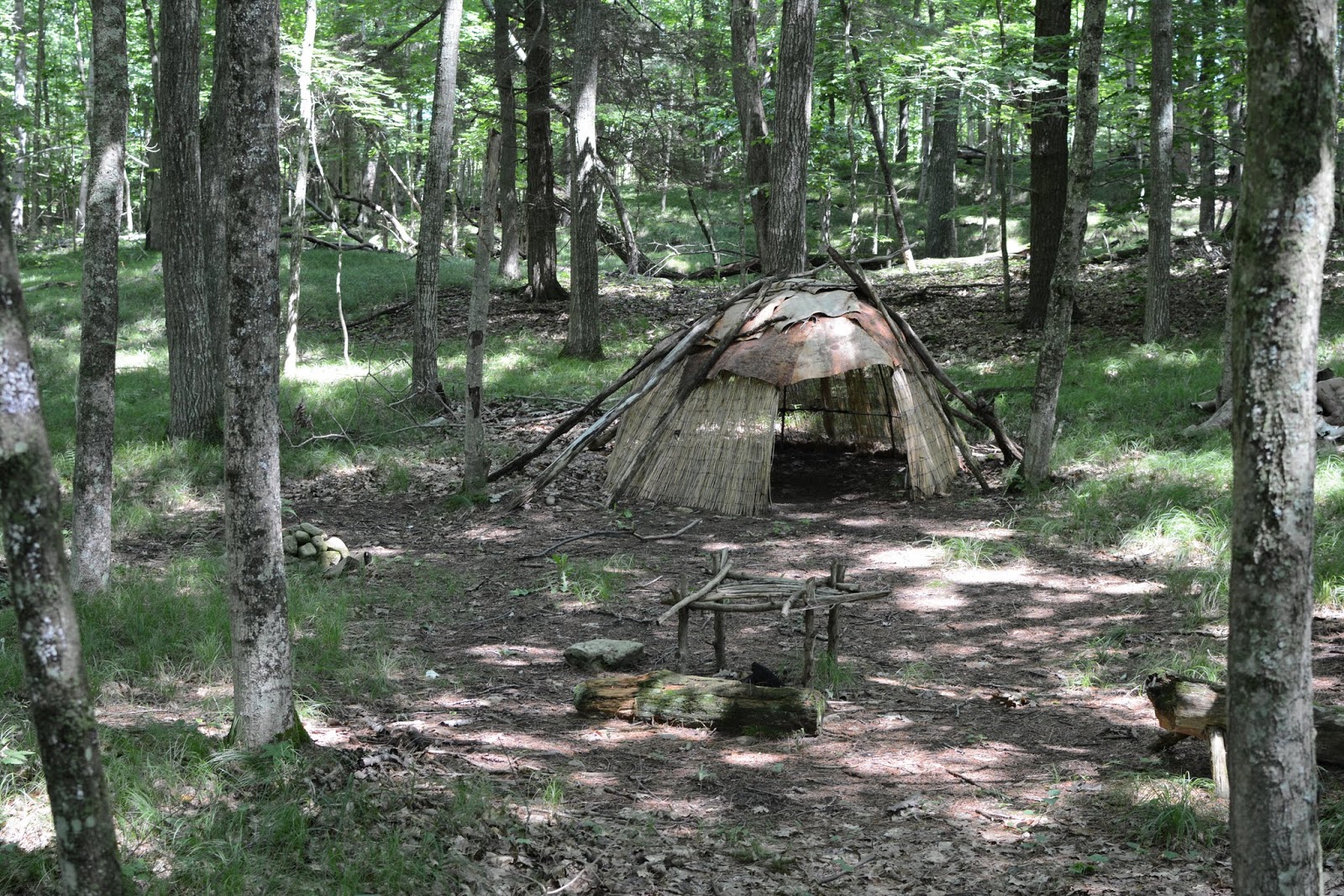

    There is a mock up of an early tribal village. This showed how things would have looked 1,000 years ago in this area.


     Adjacent to Whitefish Dunes is Cave Point County Park. Here is dramatic evidence of a limestone shelf that extends all around Lake Michigan and on eastward all the way to Niagara Falls. This park is well known to locals but many tourists don't even know it exists. There is no admission fee and the trail has some spectacular views.


     For the brave (or foolhardy), there are opportunities to jump off cliffs to the waters below. All along the shoreline erosion has carved out caves and depression pools that lure the daredevils.


     Along a stretch of open shoreline, rocks of all shapes and sizes have been tossed by wave action. Here people build what I call HooDoos. We have seen similar structures all throughout our travels. You start with a big rock platform and each passerby selects a rock and places it on the base. As time goes on you have the various towers. Superstition says that bad luck will come to you if you knock over a tower, either on purpose or by placing your rock on it. Conversely, good luck will come to you after you balance your rock on a tower. Not sure if it's true, but I did build several towers just to cover my bases!!


Thursday, June 15, 2017

Our Summer Home - 2017


     We bid "Farewell!" to Kentucky following the Memorial Day weekend and headed northwards to our destination for the summer. As we've said in earlier blog entries, we have taken a workamping position in Baileys Harbor, Wisconsin. This small village is on the eastern side of the Door County Peninsula in east central Wisconsin, on the shores of Lake Michigan. We arrived after a couple of days on the road and settled in to our summer home. We have a nice level pad tucked away in a corner of the park. Behind us is a pasture where "happy cows" graze and contribute milk for Land O' Lakes dairy products.


The length of our daily commute...
     Upon arrival we met our boss, John Anderson, aka "Beans" (hence the unique campground name of Beantown). He had a list of projects he wanted to accomplish before the Fourth of July holiday. That is a contributing factor to why it has taken so long to post this entry! The campground occupancy is steady but not filled up until the Fourth. One of the first things that we did was get the pool opened and ready for swimmers.


"Before" shots of the pool
     As with any outdoor pool, over the winter dirt and debris collect in the bottom along with rain and snow melt. This all had to be cleaned out before the pool is filled. In addition, minor repairs were needed as a result of winters ravages. Some border tiles needed to be replaced and several spots needed to be re-grouted.

Cleaned up and ready for initial fill
We had to work on the underwater lights a bit. Cleaned the lens and made sure that the seals were watertight. After getting most of the dirt and debris removed, we began to fill the pool. As it was filling, we installed the ladders and railings along with setting up the deck chairs. The pool water is heated so we made sure the heaters were in good working order and, once it was filled, we put the robot-vacuum to work. After roaming the bottom of the pool overnight, the pool was ready for swimmers! I had to make a quick fix on the gate latches and then put up the signs (rules, regulations, warnings, etc). It was time to open the gates and let the campers enjoy the pool.


Clean, pretty, and ready for action
     Meanwhile, we also cleaned and organized the community area inside the office building. Here, there is room for groups to gather, like RV rallies or family reunions. It's also a great place for campers to gather if it gets too dark or inclement outside.


Views of the Community Area
     One of the bigger projects involved painting the floor. A lot of it had been done when we arrived but one of our jobs was to finish it. Barb has spent a lot of time organizing and arranging things in the room and it really looks bright and inviting now. Brad also ran a propane gas line from the supply line to the kitchen. The campground owner recently acquired a new gas stove and we needed a supply of gas to get it working. A certified plumber has been scheduled to come out and make the appropriate connections now that the line is installed.

The Main Office
     When not cleaning and organizing, Barb can be found behind the desk in the Main Office getting arriving campers checked in and managing reservations for future stays.


     We don't have to regularly mow the property, but we did spend time spraying the weeds in the mulch of the playground area. An ongoing job also includes killing weeds that are growing up in the campsite gravel pads. Barb also did some landscaping around the entry sign and planted some flowers that add some color (see picture at the top of this blog article).

View of some of the campsites as seen from the pool
     Brad has been involved in most of these activities and several more. There is some cosmetic sanding and painting of the showerhouse doors that is going on as time permits. Lots of projects have been crossed off the list, but several more remain. We are well ahead of schedule and anticipate having all of them (and then some) finished before the Fourth of July.

Shower House, Laundry Room,  and Cabin Number 7 (all under the same roof)
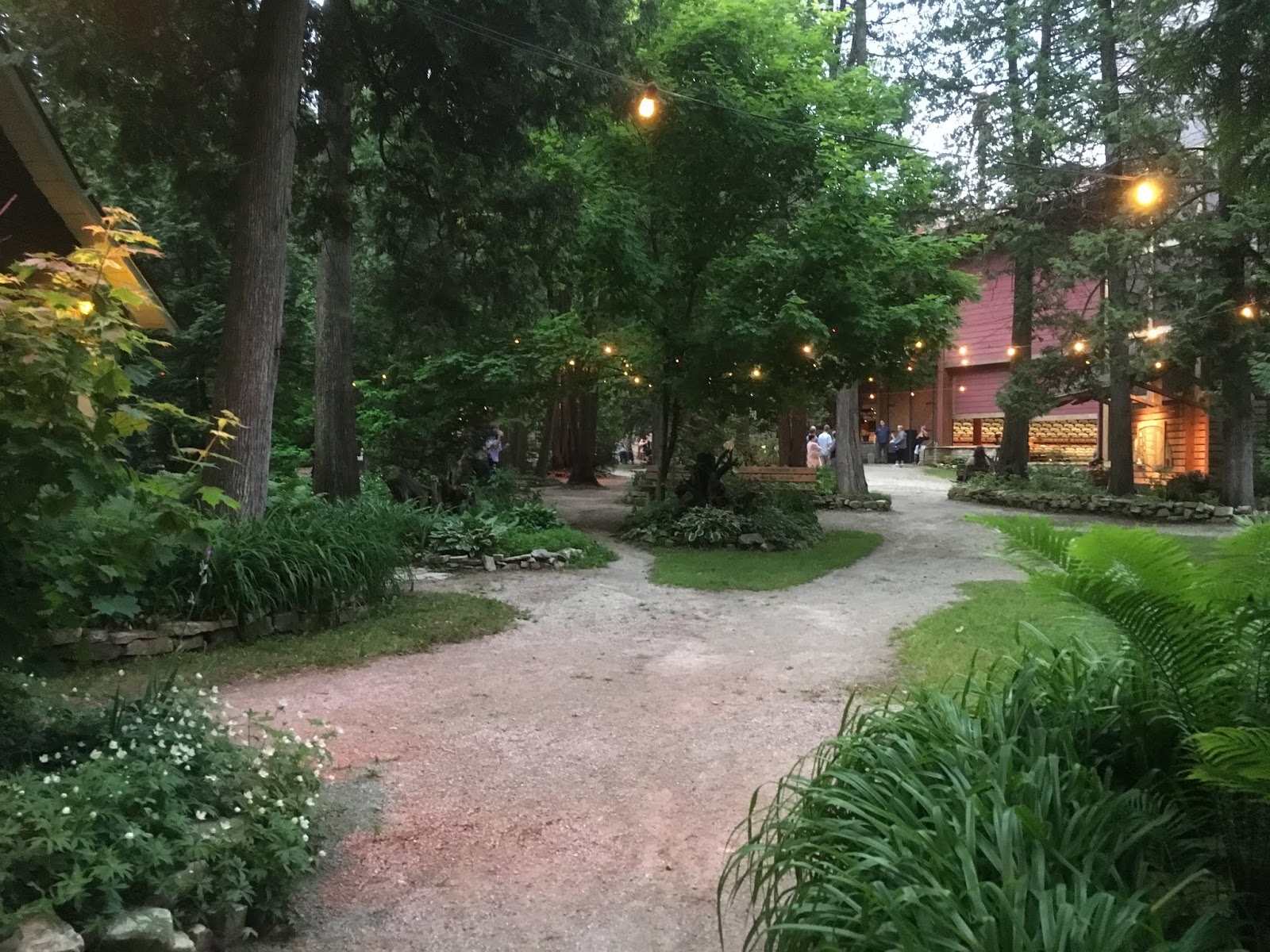
     Its not all work and no play though. We received complementary tickets to the Peninsula Players Theater (click here to link to their website) final dress rehearsal. This production, titled "The Actuary", is an original play and we were the first audience to see it performed. The theater has been the home to performances for 82 years in Door County. The theater is beautifully set in a garden setting on the shores of Lake Michigan. The sides of the auditorium can be raised or lowered depending on the weather. Thus you get an outdoor theater feeling but with a roof over your head!


     Pictured above is the entrance to the theater. The sidewalls are slightly opened and the seating is just inside.


     Another view of the theater, only from a ways down the walkway through some of the garden.


     A little further down the trail sits the Beer Garden where a bonfire awaited lighting and you could sit on the shoreline and watch the sunset. 


     You can't tell much from here, but the dots on the water is a flock of male ducks who (just moments before) were sitting on the beach. They took to the waves as we approached. This is the small town of Fish Creek on the west side of the Peninsula.


      Here on the Peninsula there are farms all around. Particularly fruit orchards, grape fields (supplying the Door County Winery among others), and dairy farms. Along with the raw materials, there are dozens of markets. Above gives you just one example of the quantity and variety of fruit jams, jellies, and preserves. 


     Along with food items, there are a myriad of small craft beer breweries. Just down the street from our campground is the Door County Brewery which produces several varieties of local brews. Above shows just a hint of the variety of selection available!


     No trip to the Peninsula is complete without a stop at Al Johnson's Swedish Restaurant and Butik. We chronicled a trip to this restaurant last year when we passed through Egg Harbor. As you can see above, the roof of the restaurant is made of sod and several goats make their home there during the day (keeping things neat and trim). The meals for the humans are Scandinavian in nature and REALLY good! Click on the link and check out their website. You can even monitor the "Goat Cam" and see how they're doing. Click here to go to Al Johnson's.

Monday, May 29, 2017

Shaker Village and Two More Distilleries


     We're coming to the end of our stay in Kentucky. Time has really flown by and I can't believe it is time to pack up and head on up the road! The Memorial Day weekend forecast called for rain and thunderstorms, some possibly severe, so we were anticipating a wash out for touring. As it turns out, the skies, while remaining cloudy, only tried to soak us once and we were safely in the car at the time.

Four Roses Visitor's Center
     We made a brief stop at the Four Roses Distillery. I say brief because it is under renovations and upgrades. The walking tour is severely curtailed as many of the areas normally shown are under some phase of construction. We opted for a tasting and a walk around the grounds. True to its name, there are Roses everywhere. The Distillery is located along the rolling hills and the Visitors Center is very classy and well laid out. Our tasting took place outside on the patio and was very informative. We learned a bit about the history of the company and about the ten different recipes that go into the three products bottled.  The Distillery was once owned by the Seagram's company but has since been sold and is owned by a Japanese firm. Our tasting included some of the Four Roses Yellow label, an 80 proof 40% alcohol drink. The second product was the Four Roses Small Batch. This Bourbon is 90 proof, 45% alcohol. It was a little spicier than the Yellow Label. The last product was the Single Barrel. This product was 100 proof, 50% alcohol. As the name implies, it is not a mixing of recipes and as such is a bit stronger and bolder than the others. At the end of the tasting, we got to keep our glasses and Barb got a special treat... since her middle name is Rose, they gave her an empty bottle of  Single Barrel that she can use to hold flowers.

Main Office Building
Part of the Distillery. Still under renovations.
     Our next trip was to the Wild Turkey Distillery. This Distillery produces 20% of all of the Bourbon distilled in Kentucky. It is a very neatly landscaped set of facilities with the Distillery, multiple Rickhouses (also called Rackhouses by some), and a new state of the art bottling plant.


     As with all of the tours, Bourbon is made essentially the same general way. The uniqueness comes from the mix percentages of Rye and/or malted Barley and the time spent in aging.  So on this tour you saw the tanks that held the Corn, Rye, and Barley, the grinding house where corn is ground and mixed to form Sweet mash. You also see the fermentation vats (which are huge here) and you see the stills where the alcohol is distilled and sent to packaging/barreling.

Just the top 5 feet of the 30,000 gallon fermentation tanks
No surprise here, the cookers
Rick after Rick of Barrels aging in the Rickhouse
Multiple floors and barrel elevator in the Rickhouse.

     Above is the beautiful view from behind the Visitor's Center. Far below, the abandoned train trestle runs over the Kentucky River, source of water for Wild Turkey.


     Our last stop was a visit to Shaker Village of Pleasant Hill, KY. Here is a link to their website:
Shaker Village. Shakers, as a group, started in the US around 1775 in New York. They were a large communal society that flourished during the 18th-19th centuries. They embraced technologies and their communities had running water before the White House did. They were pacifists who did not condone violence. In 1806 the first 44 of their order moved to Kentucky and established themselves on 140 acres. By 1823, there were 491 folks on 4,500 acres. You may have heard about Shaker Furniture, Brooms, or Jellies. They are renowned for their excellence and quality. As a group, they  were unique in the fact that they were all celibate. Groups of people were housed in large houses on the property. East House, Centre House, and West House were surrounded by all manner of buildings where members performed the tasks necessary to support and sustain the community. The picture above is of Centre House. Men and women were separate and the house was a mirror image of itself, divided down the middle. Men on one side, women on the other. The dining hall was located at the back of the house but, like the house, men sat on one side, women on the other.  Today there are two living Shakers in the WORLD but none in Kentucky. This area is being restored and is managed by a group who want to save this aspect of Kentucky history. We could easily have spent days going through the buildings and grounds. This place is on our list of places to return to at some later date.

Just some of the grounds

A collection of Shaker furniture
      Something not obvious in the photo above, but common to every room in the House, was the trim piece about 6 feet off the floor. This 1x4 contained pegs mounted about every foot or so. When not in use, furniture, clothing, or other items could be hung on these pegs. There were even examples of candle lighting that was mounted on a board with holes drilled vertically on a board. Thus the candle could be raised or lowered and hung on the peg, depending on the amount of light needed.  As you can see from many of the pictures, there are windows everywhere along the walls. They are designed to maximize the amount of available light that is let into the rooms. Closets also have windows, either inside or facing outside, to put light in them instead of using open flames. Good ideas.

Shaker made brooms

Another of the many buildings